(English version below)
Dass die Protestformen, wie sie in Lützerath und in vielen Wäldern und Industriestätten praktiziert werden, eine andere Form des (Zusammen-)Lebens einüben und einfordern, wie ich beschrieben habe, mag stimmen. Doch es steht sowohl einem Unverständnis als auch einem eher geringem Interesse einer großen Mehrheit gegenüber, die sich aufgrund eines solchen Protestes wohl kaum mit der „Art und Weise, wie sie der Natur gegenübertritt“ befassen dürfte. Gestreift werden vielleicht der Ressourcenverbrauch, der Verlust eines Dorfes und vielleicht auch die Absurdität eines Ressourcenabbaus, der später mit grausamer Umweltbilanz in Energie umgewandelt werden soll. Kaum aber die Frage des Eingriffes selbst, der Haltung, mit der wir uns kollektiv unhinterfragt einig sind, weiter und weiter aus der Natur zu entnehmen, sie für uns zu formen.
Und die unmittelbaren Konsequenzen, die in solchen Protestformen eingefordert werden – der Verzicht auf weiteren Kohleabbau im Rheinischen Braunkohlerevier, der Erhalt von Gebäuden, Wäldern oder anderen Orten, sowas – sind wiederum nur selten erfolgreich. Sie stehen in völliger Abhängigkeit von der jeweiligen politischen Einschätzung; und die lautet in den allermeisten Fällen: Ist nicht.
Der empowernde Faktor wiederum, der für Teilnehmende in einem solchen Gruppenereignis ermöglicht wird, ist im Kontext der notwendigen Veränderungen ziemlich klein.
Der dadurch bedingten gewaltsame, polizeilichen Räumung ist wenig entgegenzusetzen. Das heißt dann: Weiter so? Woher kommt dann wirkliche Veränderung?
Nur noch kurz die Welt retten
Die aktuellste aller Antworten darauf lautet: Durch uns. Das Verhalten jeder einzelnen Person könne einen Akzent setzen, den Weg zur klimaneutralen Welt, zu einem anderen Standpunkt zur Natur beitragen. Wir alle kennen Formen davon: Wie leicht es doch sei, umweltfreundlicher zu konsumieren, Kritiken von Flug- oder Schiffsreisen, Plastik- oder Fleischreduktion, achtsamer Konsum, Bahn-Positivismus, E-Autos, etc.
Das Bild, dass ich damit in die Welt setze ist dass einer individuellen Kritik des Konsumverhaltens. Dem – zurecht – entgegengehalten werden muss, dass Konsumkritik die falsche Form von Kritik ist. Der Kern hiervon lässt sich in mehrere Richtungen auffächern: Zum (1) in die empirische, messbare Verantwortung, also den Effekt, den ein:e Einzelne:r mit bestimmten Handlungen überhaupt erreichen kann, zum anderen (2) in der Rolle der Gesellschaft zum Individuum, vom Ganzen zum Einzelnen sowie im (3) fordernden, verzichtfokussierendem Ton, in dem dieses Thema teilweise wahrgenommen: dem dürfen, sollten, müssen, das manchmal da ist, manchmal aber vorher abwesend war.
Beginnen wir mit den möglichen Veränderungen, die eine einzelne Person erreichen kann. Die sind tatsächlich vergleichsweise gering. Und das nicht, weil man als Einzelne:r in einem Kontext von Millionen bzw. Milliarden, je nach Bezugspunkt, schlicht untergeht. Der Punkt individueller Verantwortung geht ja darüber hinaus und betrifft die Kombination gemeinsamen Handelns. Doch auch hier. Nehmen wir die deutschen CO2- Emissionen in der groben Aufteilung nach Sektoren:
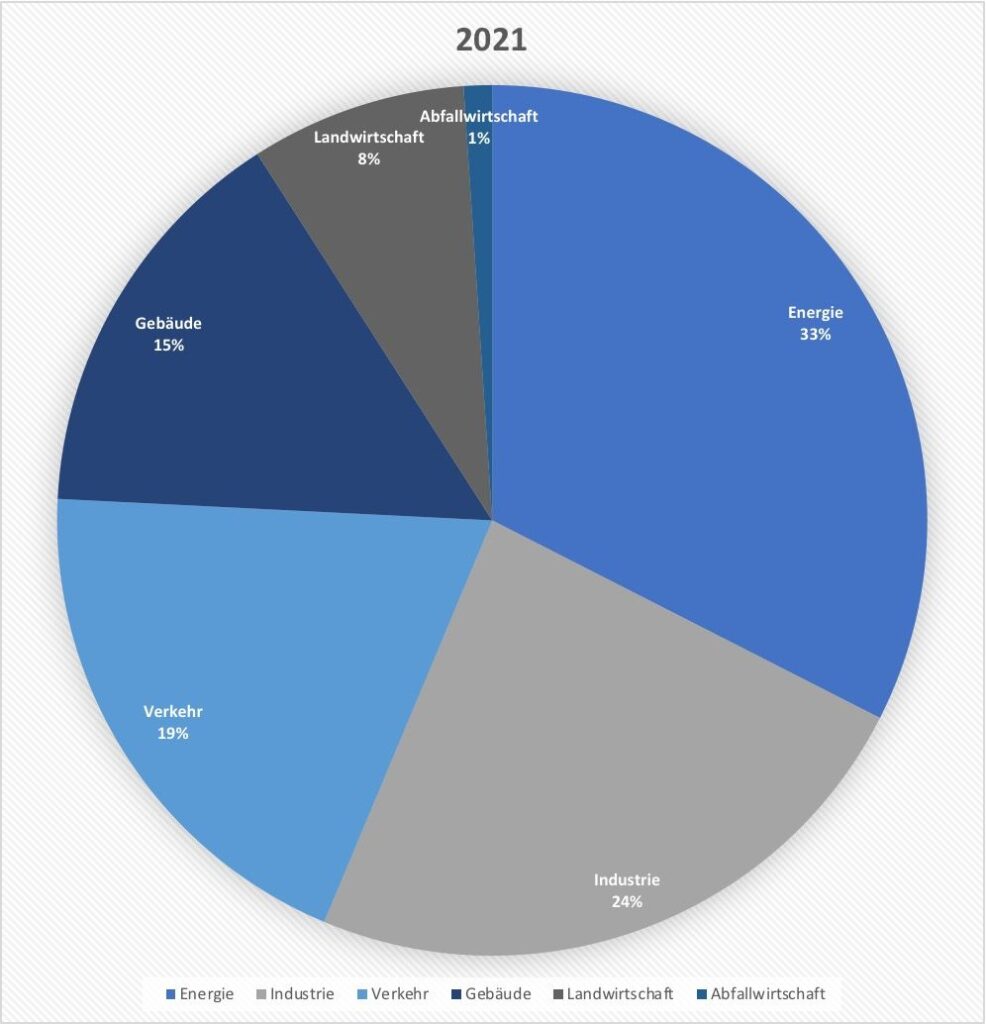
Die mit Abstand größten Emissionen liegen bei Energie und Industrie. Sicher, dann kommen Verkehr und Gebäude, doch diese stehen ja keineswegs in alleiniger Verantwortung der Einzelnen. Beim Verkehr entfallen an die 30% auf LKW, ebenfalls knapp 30% sind beim Gebäudeteil Nicht-Wohngebäude (Nutzung, nicht Bau). Das ist holzschnittartig, denn so einfach lassen sich solche „Sektoren“ gar nicht voneinander abgrenzen. Man kann sich dem Punkt, den ich mache, auch anders annähern, zum Beispiel kombiniert auf emittierende Akteur:innen und landet dann bei Zahlen wie der, dass es 30 Unternehmen sind, die ganz allein 36% der Treibhausgasemissionen Deutschlands produzieren.
Oder man betrachtet vergangene Entwicklungen, zum Beispiel:
In den … Jahren 1995 bis 2015 … sanken die konsumbedingten CO2-Emissionen EU-weit um rund zwölf Prozent. Die ärmste Hälfte der Haushalte reduzierte ihren CO2-Ausstoß dabei um fast ein Viertel (24 Prozent), diejenigen mit mittlerem Einkommen um 13 Prozent. Im Gegensatz dazu legten die reichsten zehn Prozent der Europäer:innen um drei Prozent zu, das reichste Prozent sogar um fünf Prozent.
Die Größenordnung wird klar, denke ich. Individuelle Verhaltensveränderungen haben einen nachgeordneten Stellenwert bei der Reduktion von CO2-Ausstößen. Und wie das Zitat oben zeigt, geht mit Einschränkungs- und Verzichtsaufrufen an „verantwortungsvolle Konsument:innen“ auch ein soziales Ungleichgewicht einher. Anders: Gerade „Oma Erna“ hat schon einiges unternommen, es kann doch jetzt nicht darum gehen, weiter bei ihr anzusetzen – bei ihrer Heizung, ihrem Urlaubsflug oder ihrer Salami. Was dann auch Punkt zwei klarmacht: Das Falsche am fordernden, verzichtfokussierten Charakter des individuellen Klimafokus‘.
Der grassierende Fokus auf die individuellen, alltäglichen Entscheidungen, Reisen und Käufe, legt den Fokus somit klar auf die falsche Ebene. Die Rettung der Erde ist keine persönliche Aufgabe. Konsumkritik ist die falsche Kritik.
Hingegen: Wie verändern?
Nun ist jedoch die Größe der uns bevorstehenden Veränderungen schwer zu überschätzen. Was war die Ausgangsfrage? Wie kommen wir denn jetzt in Veränderung? Es sieht nicht danach aus, als wäre die großspurige, politische, fast revolutionäre Veränderung das, was kommt und uns in die Spur bringt, auf der wir anders mit diesem Planeten umgehen.
Kurz rumgespinnen: Wenn jetzt, spontan radikalisiert, eine Regierung beginnt, auf die Tube zu drücken: autofreie Wochentage, Abriss und Neubau nur noch auf Begründungsbasis, Industrieverpflichtung Klimaneutral 2030, Moor-Wiedervernässung, Verbot kurzer Flüge, Fleischrationierung, Vermögensbesteuerung, ach, was weiß denn ich. Die Frage ist jedenfalls: Wie soll das aussehen? Der ziemlich umfassende backlash auf so viele der gegenwärtigen Maßnahmen – gegen Windräder, Wärmepumpen, ÖPNV-Fokus, Industrievorschriften –, die Rede von einer Deindustrialisierung; all das zeigt sehr deutlich auf, dass es ohne eine Basis an Rückhalt und Unterstützung, einen Denkrahmen, in dem sowohl die Anpassungsnotwendigkeit als auch die Nicht-Nachhaltigkeit des aktuellen Konsumierens, eine Rolle spielt. Auch die systembezogenen Entscheidungen treffen, oft sehr direkt, das alltägliche Konsum- und Lebensverhalten von uns allen.
Anders: Veränderung braucht die Verankerung in der Alltagswelt und im alltäglichen Denken der Menschen. Und da setzt eben auch die individuelle Ebene an.
Dabei geht es weniger darum, die Effekte zu betrachten, die im Wirtschaftsmodell dabei so oft fokussiert werden: Dass es uns über die Nachfrage möglich ist, das Angebot fundamental zu verändern. Denn dieser Effekt ist begrenzter. Sicher: Der Wunsch nach und Kauf von Fleischersatzprodukten bzw. Produkten mit deutlich stärkerem Fokus auf menschenwürdige Produktionsbedingungen hat eine immens wachsende Aufmerksamkeit bei Herstellern geweckt hat. Rügenwalder verkauft seit letztem Jahr mehr vegetarische Produkte als Fleisch. Doch das bedeutet nicht, dass der Konsum deutlich verändert ist. Eher ist er erweitert und vergrößert. Vegetarische Produktion ersetzt keine Fleischproduktion, für den Konzern handelt es sich nicht um ein Nullsummenspiel. Er vergrößert seinen Umsatz deutlich, weil ein Angebot dazukam, nicht weil eines ersetzt wurde.
Aber diese Entwicklung hat einen Effekt in der Lebensrealität. Die Erfahrungen, bei Eltern oder Verwandten auf einmal, und oft ungefragt, mit einem Problembewusstsein konfrontiert zu sein – „So viel Fleisch essen wir gar nicht mehr“ (ob es nun stimmt oder nicht: es ist Ausdruck einer Wahrnehmung) – ist in meiner Generation fast omnipräsent. Sie hat ihren Anfang in der impliziten wie expliziten Existenz von den Menschen, die auch die Nachfrage nach Fleischersatzprodukten treibt. Über das Vorleben, Nachfragen, Kritisieren. Über die Präsenz.
Wir sollten ja wohl kaum anfangen, einem „so viel Fleisch esse ich nicht“ entgegenzuhalten „ach, unwichtig, was du konsumierst“. Die Themen müssen auf den Tisch. Ob es Einkaufsverhalten und Überschuss ein nice to haves ist, Essenswahl, Reiseverhalten oder Wohnraumnutzung. Das gehört dazu. Nicht, weil man alles zwingend lassen muss, aber weil es mindestens in einen anderen, weniger ausbeuterischen und überflussfokussierten Modus überführt werden muss.
Shame, shame, shame
Konsumempörung ist die falsche Form von Kritik. Aber die Dinge, die auf dem Weg in einen anderen Umgang mit der Welt verändert werden müssen, können wir nicht sein lassen, wie sie sind, weil es vor allem große, politische Maßnahmen braucht. Die immerwährende Konfrontation von Handlungen, Konsum- und Lebensentscheidungen und eingeübten Verhaltensweisen mit der Realität, in der wir leben, ist mehr als angebracht. Sie läuft dann fehl, wenn sie auf dieser Seite verhaftet bleibt. Wenn es – wie zuletzt häufiger in den deutschen Medien – nur noch heißt: „Darf man das noch“ und „mach mal anders“. Die Verbindung zur politischen und systembezogenen Ebene darf nicht aus dem Blick geraten, das ist klar. Aber ohne wird es nichts.
Auch die Wahlentscheidung ist eine individuelle Entscheidung. Und eine Welt, in der immer wieder die Frage des Klimas und der Natur im Raum steht, hat hierauf einen Einfluss. Vielleicht muss es häufiger heißen: „Und hast du beim Urlaubsplan über das Klima nachgedacht?“ ohne damit gleich die Unterlassung einzufordern. Vielleicht muss es häufiger heißen: „Klar sollte man das. Aber man kann auch erstmal so wählen, dass andere mitmachen müssen.“
Ich weiß nicht, wie das geht. Ob das geht. Aber so lange wir an einem demokratischen Zusammenleben orientiert bleiben, führt der Weg in ein anderes Verhältnis zur Natur eben auch über ein großes Stück Meinungsautobahn. Sowohl Politik als auch Unternehmen leben nicht im luftleeren Raum, abgeschieden von dem, was ihnen aus der öffentlichen Meinung, den gesellschaftlichen Vorstellungen entgegenschlägt; jedenfalls dann, wenn es präsent und manchmal laut genug ist. Wenn es im Alltag verankert ist. Veränderungen im Alltagsverhalten und im Denken verändern das Feld, in dem Entscheidungen getroffen werden, ob das Regierungen, Unternehmen oder sonstwas ist.
Das individuelle Entscheidungen keineswegs ausreichend sind, selbst wenn sie umfassend getroffen werden würden, heißt nämlich nicht, dass das Umgekehrte richtig ist.
Jeder Konsum hat soziale Bedeutung und Effekte. Er spielt sich ab in einem Umfeld von Menschen. Er beeinflusst diese Menschen. Viele dürften die Erfahrung gemacht haben, wie sich das eigene (Nach-)Denken verändert, wenn sich die Gruppen ändern, mit denen man Zeit verbringt. Konsum muss zum Objekt von Nachfrage, Kritik und Analyse gemacht werden. Nicht immer negativ. Nicht als reine Scham. Aber das hat Kritik auch nie bedeutet. Kritik ist prüfend, beurteilend, nicht per se abwatschend, tadelnd. Konsumempörung ist falsch. Kritik nicht.
Wir tun das sehr zurecht auch bei anderen Fragen. Bei Fragen von Rassismus und Sexismus setzen wir ebenfalls auch bei Individuen und ihren Verhaltensweisen an. Und üben Kritik daran. Nicht, weil die Welt von allen Unterdrückungen und Feindseligkeiten befreit wäre, wenn alle in ihrem individuellen Verhalten aufhören, rassistisch zu sein. Dazu sind die strukturellen Ausschließungen zu groß. Aber eben weil es einen Unterschied macht, wie sich Menschen verhalten. Im Alltag wie im Denken.
Es geht nicht nur darum, aber eben doch auch. Das gleiche gilt für Natur und Klima.

Still allowed?
It may be true that the recent climate protests like Lützerath and in many other forests and industrial spaces, train for and actually demand a different way of living (together) or (co)existing—as i have argued before. However, while this might be true, it stands in opposition to a lack of understanding and a low level of interest that a general society has in these forms of dissent. Opposed to people, which would not concern themselves with the „way they engage with nature„. They might have discussions about the consumption of resources, the loss of a village, maybe the absurdity of extracting resources to convert them into a very enviromentally unfriendly way of producing energy. They rarely will adress the questions on the whole endeavure itself, on the attitudes with wich we collectively agree to keep taking from nature and forming nature for us.
The immediate consequences these forms of protests demand—the abstention of further coalmining in the Rhenish mining area, the preservation of buildings, forests, and places —are rarely very successful. They depend on political will and assessment, and that is, usually, „Not happening“.
The empowering Factor of individuals partaking in the protest, might remain, even though it’s effects can be understood as small compared to the necessary changes in the world.
The violent eviction by the police, on the other hand, was bound to happen. There seems to be not much to be done, at least in the long run. On to the next one? How, then, does the necessary change come about?
Just saving the world
And the currently prevalent answer to this increasingly is, if any: Through us. The behaviours of individual persons, in this perspective, can bring about the path towards a climate-neutral world and a different standpoint towards nature. We all know forms of this argument: Been sold on the idea of more enviromentally conscious consumption, saw critiques of air or sea travel, of plastics or meat, encouraging words for mindful consumption, train rides, electronic cars, etc.
This now is a vivid picture, i hope, of individualistic critiques of consumption or consumerism. To which the counter should, rightfully, be: consumer-critique is a wrong form of critique. This leads in different directions: (1) the empirical, measurable effects of individual behaviors, (2) the relationship between society and individuals, the whole and a part, as well as (3) the perception of sacrifice which is connected to the topic (or its perception), for some: the may, the should, the need to—which can, of course, be there, but can very well have been absent before it is brought up as an argument.
I will begin with the possible changes in the realm of individual persons. They actually are rather small. This is not because a single person is not more than a needle in a haystack compared to the reference of millions and billions. Here, individual responsibility goes beyond individual effects, it concerns the combined effects of collective action. Even with this in mind, though: take the German case, as a wealthy-country-example, with emissions broken down by economic sectors:
By far the largest emissions come from energy and industrial activities. After that, transport and buildings come a distant third and fourth. Transport then, can be dissected further, showing that truck deliveries account for 30 % of them, while buildings have non-residential buildings at those same 30% (emissions from usage, not construction). This is a simplified picture, and these sectors can not be easily separated for this purpose. Another way of getting towards the point here would be to combine emitting actors, which leads to a 30 again: 30 companies which produce 36% of Germany’s greenhouse gas emissions.
Looking at recent historical developments: for example:
In the … years 1995 to 2015 … consumption-related CO2 emissions fell by around twelve per cent across the EU. The poorest half of households reduced their CO2 output by almost a quarter (24 per cent), while those with middle incomes reduced theirs by 13 per cent. In contrast, the richest ten per cent of Europeans increased theirs by three per cent, and the richest one per cent even by five per cent.
The scale of needed change becomes obvious, I think. And the inequalities more inconceivable. Calls for restriction and sacrifice are, when present, directed at responsible consumers, which always has immediate, consolidating effects on social inequality. But we know that Grandma Erna has changed stuff, as is bound to happen when the problem gets more obvious. Why put additional pressure towards her? Why disregard her opportunities to even change (outcomes of) her behaviours? This will lead to the strong rejection of sacrifice-focussed discussions and therefore of an individual focus in climate questions.
And it looks like it is true, that the rampant focus on individual decisions, holidays and consumption focuses on the wrong level. Saving earth cannot be a personal to-do-item. Consumer-critique is wrong critique, then?
How to change, then
The scale of necessary changes is hard to even grasp. And the question of How do we actually get into change? remains unanswered. Grand, revolutionary change is not imminent, there is no treating this planet differently.
Take a speculative, though: If a government now, suddenly radicalised, starts to put the foot down: car-free days, repairing buildings and things instead of demolating them, adding industrial obligations, supported by force instead of incentive, rationings, measures against the (super) wealthy, you name the it. In any case, the question arises: How’s that gonna look, exactly? The fairly comprehensive backlash to so many even currently undertaken measures, from wind turbines to heat pumps to public transport and industrial regulations, the scares of deindustrialization—all this will not go away. It needs to be countered. The necessities for adaption, the knowledge on non-sustainability of current modern life need a presence. System-related decisions have direct connections to our all everyday consumption.
Which also means that change needs a connection to the everyday world and to everydayworld-thinking. And that is, where an individual level always comes in.
This, then, is less about looking at the effects of behaviours, like the economic model: demand changing supply. This effect is, as I’ve said, limited. The desire for alternative products, for stronger focus on production chains and their differen ethical problems, might have brought with it noticeable changes. Just take Rügenwalder having sold more vegetarian products then meat ones in the last year. But this does not mean that consumption has changed significantly. Rather, it has been expanded and increased. Vegetarian production does not so much replace meat production, it is not a zero-sum game, definitely not for Rügenwalder. For them, there now are additional products, not replaced ones.
This development has different effects on the realities of life, though. The experience of confrontation, often unwanted, often subtle, leads to questions, to forms of awareness, even if they might take the form of parents, that tell us and themselves, they „also don’t eat so much meat (anymore)“. True or not, this expresses a perceptiveness of the problem, though. This is a change, that has been brought, through a combination of factors, but not leat because of the implicit and explicit activities of people asking and advocating for alternatives to meat. Through examples, asking questions, criticising—through presence, they initiated shifts.
We should hardly ever counter a „I don’t eat (much) meat“ with the un-importance of individual consumption. The issues are adressed in the small acts, as well, and that should not be put away. This whole topic, this future, will be about consumption behaviours, affluence, nice to haves, food and travel choices, forms of spacial usage. These will be part of our lifes as questions. Not, because it all has to be changed or stopped completely but because it has to be transformed to fit another, less exploitative and less abundant mode of living.
Shame, shame, shame
So, looking at consumption is the wrong angle; but things must be changed on the way to a different relationship with the earth. They cannot be left as they are because large-scale political and, by extension, economic measures are needed. A constant confrontation of behaviour, consumption and lifestyle choices with a deforming reality is appropriate. It fails, when it gets stuck on this, when it leads into „Is that still allowed“ and „do this now“, loosing connection between individuals and systemic, distant political level. But this connection should not be lost.
This can be extended: Voting is an individual thing, as we understand it. Different discussions and questions need to be thought of having effects on these voting decisions. So, people need to be confronted with those questions, even if the specifics of these confrontations can be up for debate. Questions and confrontations can be brought about differently, but they need to be there, to show presence.
How exactly this works out, I don’t know. But as long as we remain oriented towards a democratic form of (co)existance, the path to a different, sustainable relationship with nature also leads through a tunnel of the public, the society. There are no vacuums, no isolations shielding politics or companies. They are connected to more individual opinions and lifes, to perceptions of societies. Especially, if these are (and can be) loud. If these are connected to a real, everyday world. Changes in daily activity and changes in thought are easily underestimated changes, but they have so fundamental effects on discussions and decisions.
The individual decision might not be sufficient, but it can lead a long way.
Every act of consumption has social meaning and effects. It takes place between people, influences these people. We might know from a very personal experience, how much others can influence our acting and thinking, especially noticeable when contexts and people change. Consumption needs to be have a strong presence in questions, analysis, critiques of the current and future world. Not as a general negative, not as shame. Examining, judging, where necessary, remaining constructive. Outrage at consumers is wrong, the criticism is not. Quite the contrary.
We act like this in different contexts as well. Concerned with racism and sexism, we stay with individuals and their behaviours. We criticise them. Not because we expect freedom from oppression and hostility just through individual change, —there are‚ too many structural forces present. But we do so, because it makes a difference how people behave. In everyday life as well as in thought, because it extends into society.
Its not only about individuals. Still, they matter.